


Knowing the meaning and differences of uncertainty, errors, and tolerance is crucial. The reason is that these parameters help make working parts. Remember, when we take measurements, the readings or results are never accurate. This is true regardless of whether you measure manually or using advanced machines.
As a result, there remains a doubt about the measurement results. That’s why the use of parameters such as uncertainty and tolerance is handy. Remember, these parameters are widely used in laboratory testing and the manufacturing of parts. In this article, I will discuss uncertainty, errors, and tolerance and their key differences. Let’s get started.
What is Measurement Uncertainty?

Uncertainty is an important parameter used in different laboratories and testing. It gives the idea that the measurement taken is not 100% precise. Some chances or errors must be considered during manufacturing or testing. In other words, uncertainty indicates a probability of errors for exact measurement. It shows that the final measurement might be slightly higher or lower than the noted measurement.
You’ll see uncertainty written as ±0.1, ±0.2, ±0.3, and so on. The plus and minus signs indicate that the specific measurement can be either higher or lower by that specific number. Suppose you measure 20cm with ±0.5 certainty. This means the measurement is slightly off, with a possible variation of ±0.5.
This means the measurement can be either 20.5cm or 19.5 cm. This is the best way to remove the confusion and convey the message that measurement should not be considered as perfect. It is worth noting that uncertainty is considered not only for manual but also for measurements taken by machines. Remember, both humans and machines are always prone to mistakes.
Different factors can make reading slightly less accurate. These include humidity, temperature, large-scale measurement markings, and more. However, by using uncertainty, you reduce the likelihood of errors. This uncertainty is even more critical when you make parts or products that require precision.
How to Calculate Uncertainty?
There are two readings or measurements used in laboratories. These include the measured and true values. The true value determines the errors and uncertainty. So, uncertainty calculation helps determine how much a measured value deviates from the true value. Here is the exact formula you can use to calculate the uncertainty:
Uncertainty ≈ (Maximum value − Minimum value) ÷ 2
Suppose you have a rod and you measure it with specific measurement tools. During these measurements, you get different readings, such as 50 cm, 49.3 cm, 49.5 cm, 50.5 cm, and 50.7 cm. This means that each time you measured, you found a slight difference. Since there are deviations in the measurements, this indicates uncertainty.
To calculate it, you will take the maximum measurement value and subtract it from the minimum measurement value. For example:
Uncertainty = (50.7 − 49.3) ÷ 2 = 0.7 cm (or ±0.7 cm)
The measured value is around 50 cm ±0.7 cm. This means the true value in these measurements can be 50 cm ±0.7 cm. It indicates that the value can be either 0.7 cm less than or 50 cm greater than 50 cm. You can calculate the uncertainty using this formula for different values as well.
What is Measurement Error?
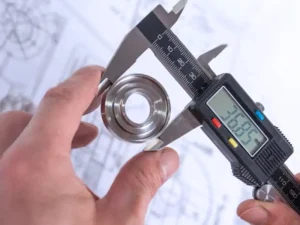
As previously mentioned, uncertainty indicates the likelihood of an error. However, the error itself is the difference between your measured value and the true value. There are mainly two types of errors: positive and negative. For example, if your measured value is 30 cm. However, the true value of this measurement is 33 cm.
This means there are errors by -3 cm. Since it is minus, it would be negative errors. Similarly, if your true value was 30 cm, and your measurement value was 33 cm. In such a case, there will be an error of 3 cm, and it is called a positive error. Confused about how to calculate errors? Here is the formula:
Error = Measured value − True value
It is noteworthy that measurements can never be 100%, even with the most up-to-date methods. Multiple factors cause measurement errors. These include issues in tools, environmental impact, fault from the person, and so on. Unfortunately, we cannot control all the factors to get 100% precise measurement. If we were able, we would have eliminated the errors. However, knowing the error is always beneficial when you’re working in a laboratory with different equipment.
Types of Errors
Errors can be classified by their causes. Some errors can be mitigated to some extent, but they require utmost care and controlled environments. Here is the list of these types:
- Human Error
- Random Error
- Systematic Error
- Calibration Errors
As I mentioned, errors are inevitable regardless of how good your measurement skills are. They are unavoidable, so understanding them is crucial to mitigating their impact on precision parts or testing. Human errors are among the most common types resulting from human negligence. Even if you measure with the utmost attention, you’ll still make errors. Random error occurs due to an unpredictable factor.
The error range can vary each time due to random errors. Systematic and calibration errors are closely related. They are caused by wrong calibration or faulty measurement tools. However, this error is generally consistent regardless of how many times you measure. Why? That’s because you’re using faulty tools, or they are not calibrated to give you an accurate reading.
What is Tolerance?
Tolerance is another important parameter, but it is different from both uncertainty and errors. How? The reason is that tolerance indicates an allowable or permissible variation in the value. In other words, it refers to the acceptable deviation for testing or assembly of different parts. Suppose you have a rod with a length of 70 mm with a tolerance of ±0.4 mm.
This means the rod must be 70mm. However, if it is 69.6 or 70.6, it is still acceptable, and your specific operation won’t stop. This ±0.4 mm is actually a variation or deviation, but this range is acceptable. This plus-minus (±) indicates the range of variation, which is not deal-breaking for the test or manufacturing process. Suppose you’re conducting a test in an environmental testing chamber. In this test, the temperature tolerance is ±2 degrees Celsius.
In such a case, your test will be fine if the temperature is between 32 or 28 and 32 degrees Celsius. The ±2 degrees Celsius deviation is acceptable for this testing, and you’ll still get accurate results. This allows you to keep the temperature set to 30 degrees Celsius, but with acceptable variations. This is very helpful if your environmental chambers are old and slightly fluctuate in temperature.
Difference Between Uncertainty, Error, and Tolerance
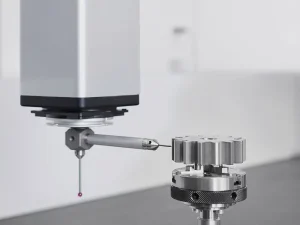
Uncertainty, errors, and tolerance are distinct concepts. In fact, they serve different purposes for engineers and manufacturers. First of all, uncertainty refers to the possibility of errors. It indicates that manufacturers should not blindly trust the measurement. There is a chance of errors in the reading, which must be considered. This helps make decisions when manufacturing parts where precision matters most.
Errors, on the other hand, are deviations between the measured and the actual values. You make measurements but are clearly off by the true value, resulting in an error. Manufacturing errors help in identifying the exact issue. When manufacturers encounter errors, they identify possible causes, such as faulty tools or human error. They, as a result, try to remove the errors as much as possible. This eventually helps them make reliable parts or products.
Last but not least, tolerance allows an acceptable deviation. In other words, it indicates a boundary beyond which an error is acceptable. Denoted by plus-minus (±), it indicates whether the made mistake affects the functioning of parts. Suppose two parts need to be fitted to work properly. Tolerance represents the acceptable deviation for parts to still fit each other. In simple terms, tolerance means parts or products are useful if they have errors in a specific (acceptable) range.
| Uncertainty | Error | Tolerance |
| Measurement doubt | Deviation from true value | Allowed limit |
| About process | About the actual value | About design |
| Shows reliability | Shows mistake | Ensures function |
| Probability-based | Exact difference | Acceptability focus |
Conclusion
Let’s conclude – laboratory tests and product manufacturing have different requirements. Sometimes they involve measurements and parameters. These parameters indicate whether the different parts will make the final product and whether the test was successful or not. They also help in decision-making by determining whether the part’s measurement is acceptable or not.
Uncertainty, error, and tolerance are integral elements in every production process. Uncertainty indicates the possible range of error or doubt in the measurement. On the contrary, an error indicates a clear deviation between the measured and true values. Lastly, tolerance refers to the acceptable range of deviation or error. Manufacturers use all three parameters to produce a product that is fit for use in real-world situations.