


Environmental chambers have become crucial test equipment in modern manufacturing. They help test the products before launching them to the market. In simple words, manufacturers understand how reliable their products are before they go to the customers. However, the question is: How to choose an environmental chamber?
That’s a tricky question since different products have different testing requirements. So you should use the chambers required by your testing procedure. Incorrect chambers won’t provide an accurate indication of product reliability. In this article, I’ll discuss the key factors to consider when choosing these chambers.
Basic Rundown of Environmental Chambers
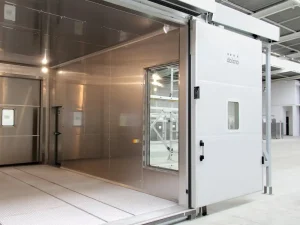
Before discussing the selection process, let’s first understand the basics of these chambers.
The environmental chambers are test equipment. They mimic real-world environmental conditions during testing. As a result, they help assess how a product behaves under conditions it is more likely to encounter during use. These chambers can adjust temperature, humidity, pressure, and other parameters.
As you know, different products are used under different conditions. For example, some aircraft parts are used under very high pressure. On the other hand, vehicle engine parts are exposed to high temperatures. This means these parts cannot be reliable unless tested for these specific conditions, right?
That’s where these environmental test chambers come in handy. These chambers consist of a body that holds the product under test. They have dedicated temperature and humidity controllers. The operators adjust the parameters for testing using a dedicated interface (screen) of these chambers. The product placed in the chambers gets exposed to different conditions.
Reliable products remain in good shape during testing in the environmental chamber, and vice versa. If a product deteriorates during testing, manufacturers improve it. With these test chambers, manufacturers can avoid launching weaker products. The use of environmental chambers has become very popular due to competition among manufacturers.
How to Choose an Environmental Chamber?
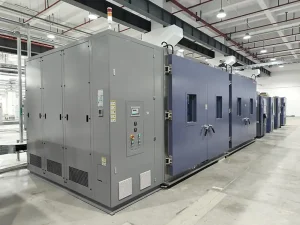
Selecting environmental chambers is a complex process. Why? That’s because every product testing requires different parameters and precision levels. In the section below, I will discuss some vital factors you must consider. This will help you choose the environmental chamber that best supports product testing.
1- Identify your Testing Needs
First, analyze your testing needs before choosing an environmental chamber. It is noteworthy that there are different types of environmental chambers available. These include humidity, temperature, and altitude test chambers, among others. Imagine you want to test electronic parts.
In such a case, you’ll test the product in temperature chambers. On the other hand, humidity test chambers are used to test pharmaceutical products. Remember, each product has different testing requirements. After analyzing your products and testing, choose the right chamber that fulfills the testing needs.
2- Temperature & Humidity Range
When choosing environmental chambers, you must consider both their temperature and humidity ranges. Remember, some products are tested at high temperatures, i.e., 90 degrees Celsius. On the other hand, some products are tested for low temperatures, i.e., -40°C.
So you choose the chamber that offers temperatures of both extremes (very low and very high). Some products require both high and low temperatures during one test. Consider not only the temperature range but also the humidity range. The chambers with high and low humidity levels test products with varying humidity exposures.
3- Decide on Control Precision
Precision is another important factor that many buyers overlook. Wondering what this factor is all about? Precision indicates how accurately a chamber maintains the specific parameters during its operation. For example, imagine you’re testing a product in temperature chambers. You set the high temperature to 85°C for 15 minutes.
During that time, the chambers must maintain a precise temperature of 85°C. If it does not maintain the conditions, it can lead to inaccurate results. I just gave an example for temperature, but your chamber should be precise across all parameters it supports. Imagine testing a product at 85°C, but the chamber fluctuates between 75°C and 85°C. This will eventually affect the testing process and its accuracy.
4- Consider Long-term Needs
Your environmental chambers must be useful in the long run. You might be buying the chamber for testing a smaller product. But in the future, you might need to test larger samples or products. Remember, every manufacturer grows over time, and testing becomes aggressive. So you should choose an environmental chamber that tests both smaller and larger products.
Apart from size, your chosen chambers must be very durable and require minimal maintenance. Some manufacturers offer cheap environmental chambers, but they are unreliable. Choosing such a chamber is never recommended because you’ll have to spend more on its regular maintenance. I recommend choosing reliable environmental chambers that last for years without needing maintenance.
5- Type of Testing Required
As I said earlier, different testing methods are used for different products. Which test you should use depends on the type of products and use case. If your product is going to be exposed to vibration, it must be tested in vibration chambers.
This way, you’ll know how your product will behave in real-world conditions under extreme vibration. Similarly, products intended for fluctuating temperatures should be tested in the thermal shock chamber. The testing you’ll use should determine the type of environmental chamber you choose.
6- Product’s Size and Load Requirements
Environmental chambers are available in different sizes. The smaller ones are generally suitable for testing lighter products. On the flip side, large chambers are best suited for bigger products. You should choose an environmental chamber based on the size and weight of your product. Additionally, chambers must be compatible with the loads that your product will exert on them.
Remember, if the environmental chamber is not compatible with the load, it may not give accurate testing results. Make sure your chambers have more space so that you can place your testing product inside without overcrowding. Wondering about which size of chamber you should choose? I recommend choosing environmental chambers that can withstand high loads. This way, you can test both smaller and larger products with ease.
7- Budget & Energy Efficiency
One of the most important elements everyone must pay attention to is the budget. Before choosing any environmental chamber, you must have a pre-planned budget. This will help you choose the right chamber that meets your needs and budget. I don’t recommend going for the most expensive environmental chambers with a Premium tag.
Instead, consider what you need and pay for the specific features you need. Remember, there are some high-end environmental chambers with modern features. These chambers use more energy, so electricity costs will be higher when they are running. Buying simple, medium-sized environmental chambers is affordable. Additionally, they require less energy for their operations.
Types of Environmental Chambers
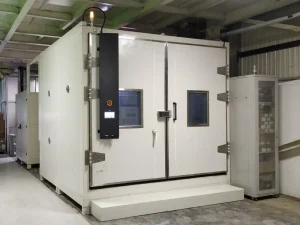
As mentioned previously, there are different types of environmental chambers. Each of them is used for a specific testing type. Here is the list of those chambers:
- Temperature Test Chambers
- Humidity Test Chambers
- Thermal Shock Test Chambers
- Altitude Test Chambers
- Salt Spray Test Chambers
- Vibration Test Chambers
- Walk-In Drive-In Test Chambers
- Dust Test Chambers
Temperature test chambers are used when a product is required to be tested at high and low temperatures. But these chambers cannot switch quickly between very low and very high temperatures. In such cases, thermal shock test chambers are used. Products in such chambers are suddenly exposed to both very high and low temperatures. This helps manufacturers evaluate how their products behave at varying temperatures.
Humidity test chambers are used to test products intended for use in humid conditions. The altitude test chambers are used for parts or products intended for use at high altitude. These chambers mimic low-pressure conditions common at high altitude. Aircraft parts and components are generally tested in these chambers.
Salt spray test chambers provide corrosive environments by exposing the product to salty spray. Manufacturers use these testing chambers to test if the product corrodes under harsh conditions. Similarly, dust chambers expose the product to dust under controlled conditions. Many products are tested in vibration chambers.
These chambers provide the cyclic vibration that the product experiences. If a product cracks or malfunctions due to vibration, it is considered low quality, and vice versa. In short, each of the chambers mentioned above mimics the real world but in different conditions. You should choose chambers as per the nature of your product or the testing you want to conduct.
Conclusion
In conclusion, environmental chambers have become a mandatory piece of equipment for manufacturers. Why? That’s mainly because of the competition among the manufacturers. As you know, multiple manufacturers are working on a single product. So they do their best to maintain the product’s quality at the highest level.
In these efforts, they use dedicated environmental chambers to ensure they launch a reliable product. These chambers help manufacturers evaluate product performance across various parameters. These parameters are similar to what a product is likely to encounter in real-world conditions. In this article, I have discussed practical tips for choosing environmental chambers. You can choose a chamber that fits your specific testing procedure.